1) Some common types of photography would be amateur photography, animal photography, scenic photography, aerial photography, commercial photography, forensic photography, medical photography, urban photography, sports photography, satellite photography, etc (more from http://www.mediacollege.com/photography/types/ )
2) Different lenses, tripods, flashes and colour filters.
3) It is the opening in front of the camera that allows light to go in, the bigger the aperture, the more light enters the camera, making the picture brighter.
4) The focus allows the camera to adjust its lens, adjusting the picture until it is sharper.
5) It is how fast the camera opens and closes its aperture, the slower it is, more light will enter the camera, if the camera is wobbly, the image will become blur. If the shutter speed is too fast, there might not be able to have enough light to enter the camera, making the image darker.
6) ISO speed is how sensitive the film is to light, if the ISO speed is too high, the image might not turn out as expected as some of the dark area might be brighter in light.
7) Metering is when the camera auto-adjusts the aperture, ISO speed, shutter speed and focus.
8) White and Black Balance is to instruct the camera whether the image is bright or dark, if you use the "White Balance" feature on an image of a dark piece of cardboard, the camera would think it is white and adjust the surrounding colours accordingly, making them brighter.
9) The Camera Composition should be so that the frame of the image should be not too low so that the top of the person's head is not seen and the frame of the picture should not be too high that the person in the image would seem small. The frame should be leveled such that the eyes are at the top third of the width of the image, the person's neck should not be "cut" off such that the person's head seems to be "floating". There should not be anything sticking into the image, including light poles, phone lines or antlers hat appear to be sticking out of the person's head. Lastly, the image should have enough space for the person to walk around if he is standing up, he should not be at the edge of the photograph.(Source: http://photoinf.com/General/ITRC_UMT/Composition_Basics_-_How_to_Get_Good_Pictures/Camera_Composition.htm )
10) Some photography techniques would be high-speed photography, tilt-shift photography, black and white photography, motion blur photography, infrared photography, night photography, smoke art photography, macro photography, HDR photography, RAW processing, panoramic photography, etc (Source: http://www.smashingmagazine.com/2009/04/22/the-ultimate-photography-round-up/ )

.jpg) smoke, before continuing. Frequently my grandfather would get burnt while cooking, making it inconvenient for him to stop cooking halfway and wash the burnt part. Although he has put on plasters on his fingers so when cooking oil hits his fingers, it would not be as painful, I can see that he is enduring the pain but does not show it, as he had been cooking for a very long time and might have gotten used to the pain.
smoke, before continuing. Frequently my grandfather would get burnt while cooking, making it inconvenient for him to stop cooking halfway and wash the burnt part. Although he has put on plasters on his fingers so when cooking oil hits his fingers, it would not be as painful, I can see that he is enduring the pain but does not show it, as he had been cooking for a very long time and might have gotten used to the pain.

.jpg)
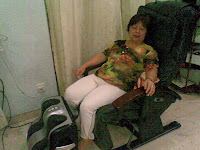.jpg) es to avoid it as when she strains her eyes it hurts. She feels that it is very painful if she opens her eyes for a long time. My grandmother rests her eyes often to cope with her eyesight problem. All these problems occur as my grandmother's eyes are getting old.
es to avoid it as when she strains her eyes it hurts. She feels that it is very painful if she opens her eyes for a long time. My grandmother rests her eyes often to cope with her eyesight problem. All these problems occur as my grandmother's eyes are getting old.
-001.jpg)
-001.jpg)
-001.jpg)
